
O & A Level English — taught the way examiners actually mark it.
Specialist online coaching for Cambridge and Edexcel English, from O Level and IGCSE through to AS and A2. 10+ years in a real classroom, distilled into small live batches for students in Pakistan and across the world.
Who this is for:
- O Level, IGCSE, AS and A Level students sitting Cambridge or Edexcel English
- Bright students who speak English well but keep landing on a B
- Parents who want an honest, evidenced picture of where their child actually stands
- Retakers who need a genuinely different approach this session
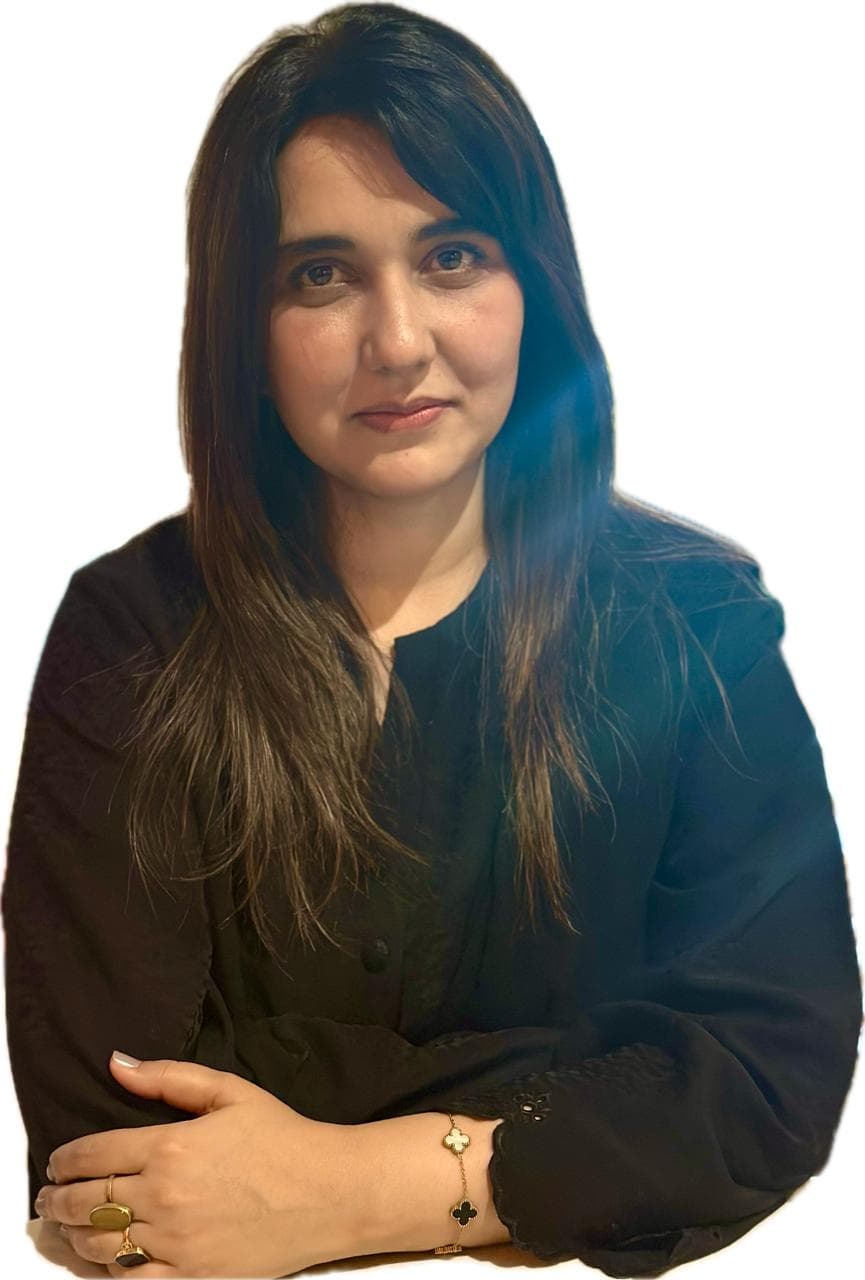
MPhil in English Literature · Government Lecturer · Cambridge (CAIE) & Edexcel
Fluency is not the same as a grade.
Most students who miss an A* in English are not weak at English. They read well. They speak well. They hand in essays their teachers describe as good. Then the paper comes back with a B, and nobody can quite explain what went wrong.
The explanation is almost always the same. Cambridge and Edexcel do not award marks for good English. They award marks for evidence — a particular structure, a particular kind of analysis, a particular way of answering the question that is set out in a mark scheme most students have never read.
That gap between speaking English well and scoring like it is the entire job of this course.
Swipe through the three key differences
“Good” is not a mark
School feedback tells a student whether their writing is pleasant to read. A mark scheme tells them whether it scores. Those are two different questions, and only one of them appears on the certificate.
The clock, not the vocabulary
Directed Writing, comprehension, unseen analysis — these papers are lost on pacing far more often than on language. Students who know exactly how many minutes each question is worth stop running out of time.
Command words are instructions
Analyse. Evaluate. Compare. Comment on the writer's use of… Each one carries a specific marking consequence. Most students read them as decoration and answer the question they wish had been asked.
Every English paper, both boards.
Tell me the syllabus code on your child's timetable and I will tell you precisely what the examiner wants from it.
Cambridge (CAIE)
| Syllabus | Code |
|---|---|
| O Level English Language | 1123 |
| IGCSE First Language English | 0500 / 0990 |
| IGCSE English as a Second Language | 0510 / 0511 / 0991 |
| IGCSE Literature in English | 0475 / 0992 |
| AS & A Level English Language | 9093 |
| AS & A Level Literature in English | 9695 |
| AS Level English General Paper | 8021 |
Edexcel (Pearson)
| Syllabus | Code |
|---|---|
| International GCSE English Language A | 4EA1 |
| International GCSE English Language B | 4EB1 |
| International GCSE English Literature | 4ET1 |
Not sure which specification your child is on? Send me a photo of their syllabus page or timetable on WhatsApp and I will confirm it for you.
Two tracks. Pick the one your child is sitting.
Years 9–11 · Typically ages 14–16
O Level & IGCSE English
The year English stops being a subject you are simply good at and becomes a subject you have to be strategic about.
We work on:
- Directed Writing — building a response that hits register, audience and purpose from the first line
- Composition — narrative and descriptive writing that earns marks for craft, not just length
- Comprehension and summary — the technique for extracting exactly what the question rewards, and nothing else
- Reading passages — inference, tone, and writing about a writer's choices without simply retelling the story
- Literature set texts — quotation banks, character and theme mapping, and essay structures that survive exam pressure
- Grammar and accuracy — repaired properly, at the sentence level, not by handing back a page of red pen
You should expect: a student who walks into the paper knowing what each question is worth, how long to spend on it, and what the examiner is scanning for.
Years 12–13 · Typically ages 16–18
AS & A Level English
The step up from O Level is steeper in English than in almost any other subject. The paper stops testing what a student knows and starts testing how they think.
We work on:
- Unseen text analysis — a repeatable method for facing a passage you have never read and having something intelligent to say within four minutes
- Language analysis (9093) — discourse, register, and framework-based commentary that reads like a linguist, not a reviewer
- Literature essays (9695) — building a genuine argument, sustaining it, and using critical vocabulary with precision
- Comparative and directed response — handling two texts without collapsing into “in text one… in text two…”
- General Paper (8021) — structured argument, evidence, and balance under a tight clock
- University-level writing habits — the ones that keep paying off long after the exam
You should expect: a student who can take an unfamiliar text apart under exam conditions and defend a genuine argument about it.
This is what a lesson actually looks like.
Students are told their writing is "good" for years, then meet an examiner who disagrees. So in every class, we mark live — the same passage, the same criteria, the same red pen the examiner will use. Here is a real example of the kind of paragraph that feels strong and scores average.
The writer uses a lot of imagery1 in this passage to make the reader feel sad2. He describes the abandoned house in great detail, which is very effective3. This shows that4 the writer wants us to understand that the family has left. Overall, the passage is very descriptive5 and the imagery is powerful.
- 1
“uses a lot of imagery”
Which imagery? Name it, quote it. An unquoted claim earns nothing at any band.
- 2
“to make the reader feel sad”
Effect asserted, not analysed. Why does this choice produce that response?
- 3
“which is very effective”
The single most expensive phrase in the paper. It fills space and adds no mark.
- 4
“This shows that…”
Restating the content of the passage. The question asked about the writer's method, not the plot.
- 5
“Overall, the passage is very descriptive”
A conclusion that repeats the opening. Nothing has been developed between them.
Nothing in that paragraph is wrong. The spelling is clean, the grammar is sound, and most students would be told it was fine. It sits at a low-to-mid band because it describes the passage instead of analysing it — and no amount of additional fluency will move it.
Rebuilding that single paragraph correctly is often worth more than a term of general English practice. That is the work we do, every week, on your child's own writing.
How the course works
We start with the mark scheme, not the textbook
In the first week, your child reads the actual assessment criteria for their paper — most have never seen it. Everything after that has a reason attached to it.
We mark live, in front of the class
Real scripts, annotated in real time. Students stop guessing what "better" means because they watch marks being awarded and withheld.
We build a bank, not a blank page
Model paragraphs, sentence frames, quotation banks, analytical vocabulary. Exam confidence comes from having prepared material to draw on, not from hoping for inspiration at 9 a.m.
We rehearse under exam conditions
Timed sections weekly. Two full mock papers per session, marked to board standard and returned with a band, a grade and a specific list of what to fix.
Parents see exactly what we see
A written progress report each cycle: current working grade, what has improved, what has not, and what we are doing about it. No vague reassurance.
What's included
Live small-group classes on Zoom
Maximum 8 students per batch, so every script gets read
Every class recorded and available to rewatch
Complete syllabus coverage for the chosen paper and board
Weekly written work, marked with examiner-style annotations
Past-paper practice — by question type first, then full papers
Two full mock exams per session, graded and returned with feedback
A written progress report to parents each cycle
WhatsApp access for questions between classes
Guidance on the university applications where the English grade matters
Group batch
Ask for the current fee
Pakistan and international payment options available.
One-to-one
Ask for the current fee
Pricing depends on level, syllabus and schedule.
Fees, payment methods and international transfer details are shared personally on WhatsApp. Sibling and full-year rates available.
A note for parents.
You are being asked to pay for something you cannot directly observe — a class your child attends without you, in a subject where "improvement" is famously hard to measure. That is a reasonable thing to be cautious about.
So here is exactly what you get.
Swipe to see what parents receive
An honest working grade, not encouragement
After the first marked task you will be told the grade your child is currently working at — including when that is uncomfortable to hear. A tutor who tells you everything is going well for six months is not doing you a service.
Evidence you can read yourself
Progress reports include your child's actual marked work with the examiner's reasoning attached. You do not have to take anyone's word for the improvement; you can see the scripts.
A structured, safe classroom
Classes run on Zoom at fixed times with a fixed register. There are no one-to-one calls with group students outside scheduled sessions, and parents are welcome to sit in on any class.
Fee clarity, in your currency
No enrolment fee, no materials fee, no surprises mid-term. Everything is quoted upfront in PKR or USD, with international payment options confirmed before you commit.
If you would like to talk it through before booking anything, message me directly. I would rather have a ten-minute conversation about whether this is right for your child than take an enrolment that does not fit.
Studying outside Pakistan?
Cambridge and Edexcel English are sat in more than a hundred countries, and the mark scheme does not change at the border. Batches are scheduled so students across the Gulf, the UK and East Africa can attend live — and every class is recorded, so a time difference never becomes a missed lesson.
Timings that work across time zones
Current batch times change by intake. Message your country or time zone and Aisha will confirm the live options in your local time.
Check my local time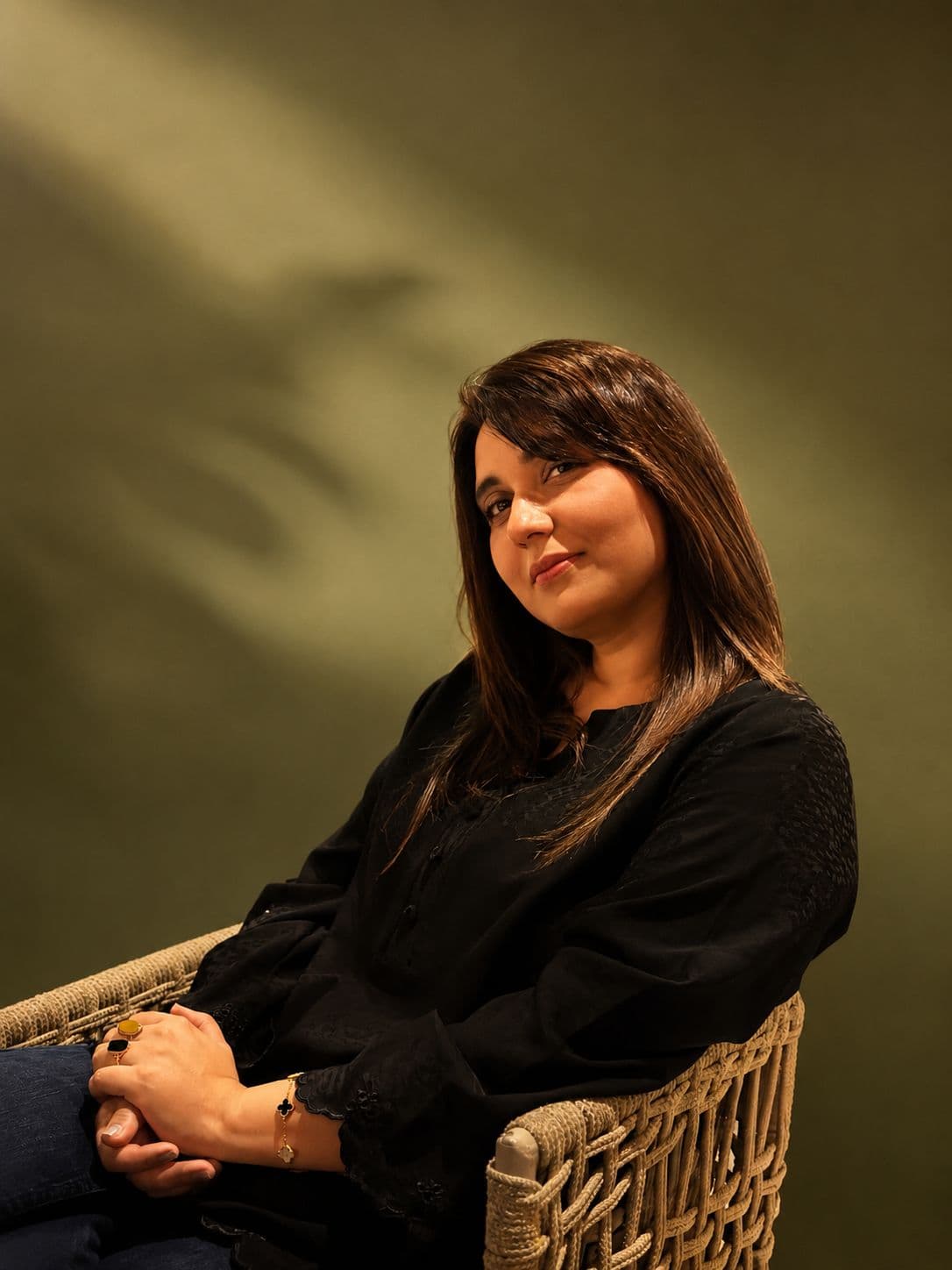
The person who will be teaching your child.
I hold an MPhil in English Literature and I am a government lecturer in Lahore. For 10+ years I have taught English across every level a student can be at — from teenagers who could not construct a paragraph to A Level candidates arguing about Shakespeare with more conviction than some of my colleagues.
O and A Level English became a specialism because it is the subject where the gap between ability and result is widest. I kept meeting bright, articulate students who were genuinely surprised by their grade — and every time, the problem was not their English. It was that nobody had ever shown them what the mark scheme actually rewards.
I now teach that online, in small batches, to students in Pakistan and overseas. Same syllabus, same criteria, same standard — with the one thing a crowded school classroom cannot offer: someone who reads every piece of work your child writes and tells them precisely why it scored what it did.
Upcoming O & A Level batches
Ask about the next available intake
Schedules differ by programme, format and learner location. Tell Aisha which programme you need and the days or times that usually suit you.
Batches are kept small deliberately — 8 students, so every script gets marked properly. Places for a given exam session close once teaching is underway.
Common questions
For parents
My child already gets good marks in school English. Why would they need this?
School marks and board marks are set against different standards. Teachers assess against the class; examiners assess against a national mark scheme. The most common conversation I have is with a parent whose child had never scored below an A in school and came out of the board exam with a B. If your child is already scoring well, this course is about protecting that — and converting it into the top band.
How will I know it is working?
You receive a written progress report each cycle containing your child's current working grade, their marked scripts, and a specific list of what is improving and what is not. If the grade is not moving, you will hear that from me before you have to ask.
Are the classes safe?
Yes. Classes run on Zoom at fixed scheduled times, attendance is registered, and sessions are recorded. There are no unscheduled one-to-one calls with group students. Parents are welcome to attend any class.
We are not in Pakistan. Does that work?
It works well — a significant share of students join from outside Pakistan. Batch times are set to suit the Gulf, the UK and East Africa, and every class is recorded, so a difficult time zone never means a missed lesson. Fees can be paid internationally in USD.
What does it cost, and how do we pay from abroad?
Group and one-to-one rates are listed above. International payment options are confirmed before you commit, quoted in your currency. There is no enrolment fee and no separate charge for materials.
Can we try before committing?
Ask Aisha to confirm whether a trial lesson or initial work review is currently available. Review the confirmed format and fee before deciding.
My child is retaking. Is it too late?
Retakers are often the fastest to improve, because the problem is usually specific rather than general. Send me the previous script or statement of results and I will tell you honestly what is recoverable in the time available.
Can you guarantee an A*?
No — and I would be cautious of anyone who does. What I can guarantee is that your child will understand precisely what the examiner is rewarding, will have written and had marked more practice papers than their school will set, and will walk in knowing exactly what they are doing. The grade follows from that; it cannot be promised in advance of it.
For students
Which papers do you cover?
Cambridge O Level English Language (1123), IGCSE First Language and Second Language English, IGCSE and A Level Literature in English, AS & A Level English Language (9093), and the General Paper (8021). Edexcel International GCSE and International A Level English are also covered.
Do you teach Edexcel as well as Cambridge?
Yes. Both boards, with the differences in mark scheme taught explicitly — because they matter, and mixing them up costs marks.
How big are the classes?
A maximum of 8. That limit exists so every student's written work is actually read and annotated each week, which is the part that changes grades.
What if I miss a class?
Every class is recorded and available to rewatch. If you miss written work, send it in late — it still gets marked.
How much homework is there?
One substantial piece of written work per week, plus timed practice as the exam approaches. It is not enormous, but it is not optional either — the marking of your own writing is where the improvement happens.
Do you help with specific set texts?
Yes. Tell me the texts on your syllabus and teaching is built around them, including quotation banks and essay plans specific to those texts.
Do you cover the General Paper (8021)?
Yes — argument structure, use of evidence, balance, and timing.
When should I start?
Ideally at the beginning of the academic year, so there is time to rebuild technique before mocks. Realistically, three months before the paper is enough to make a meaningful difference if the work is done. Under six weeks, message me and I will tell you honestly whether it is worth your money.
Discuss the learner’s English goals with Aisha.
Share the student’s level, board, syllabus, exam date and current concerns. Aisha will confirm the most relevant next step and current availability.
Ask About School English